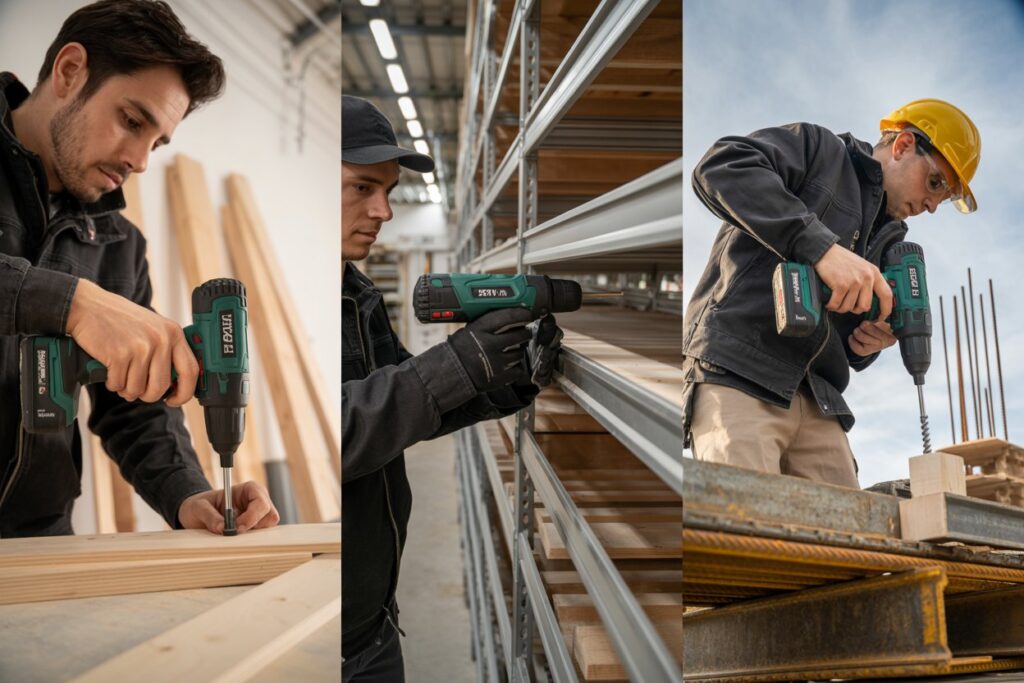
Modular Design & Multi-Functionality: Tools that Combine Functions and Reduce Inventory
By YOUWE Power Tools Manufacturer – www.professionalwrench.com
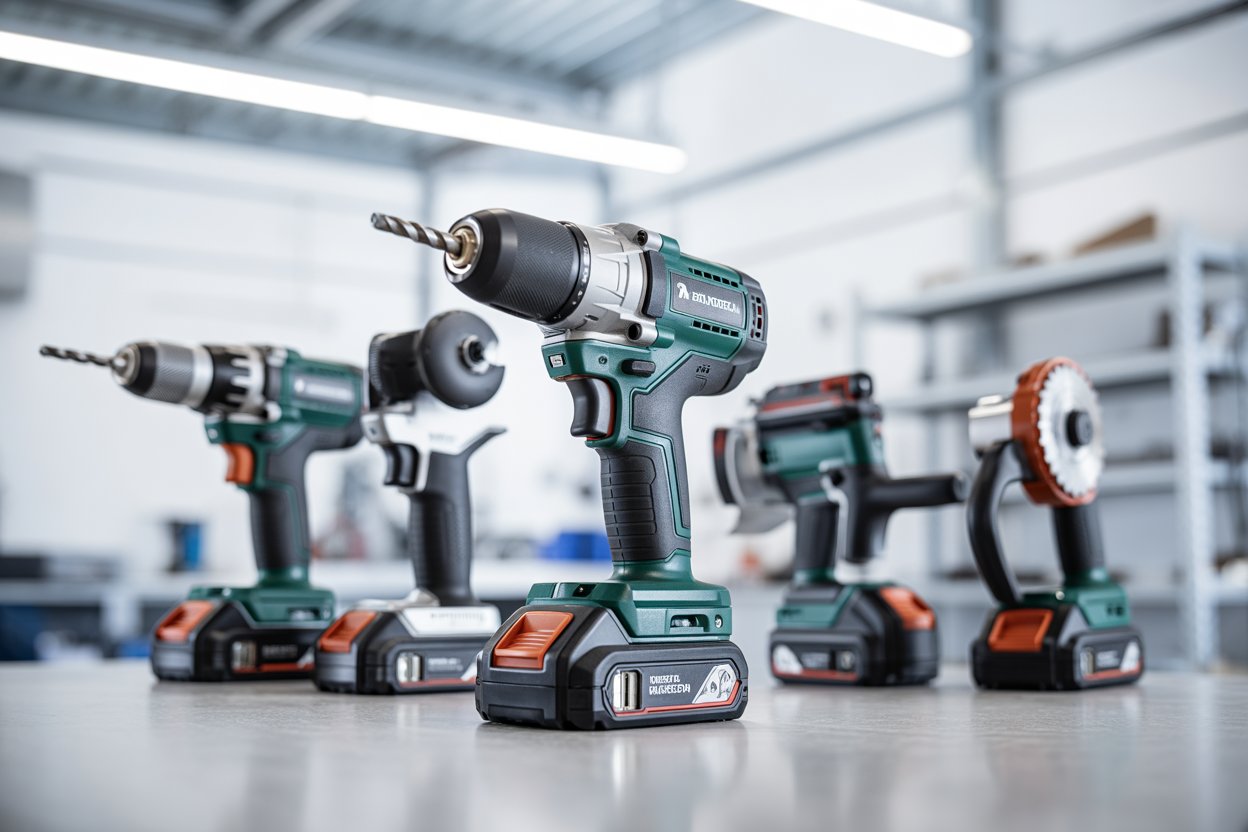
Sometimes, I look at a messy workshop and think—why do we need ten different tools when one could do the job of five? That’s the beauty of modular and multi-functional power tools. They’re not just space-savers; they’re problem-solvers for modern workspaces.
Snippet paragraph:
Modular and multi-functional cordless tools let users swap attachments or modules for different tasks using a single base unit. This approach saves inventory costs, reduces storage space, and increases efficiency, making it a growing trend in both professional and DIY markets.
I’ve watched this shift firsthand. Buyers now ask for flexibility, not just raw power. In trade fairs and factory talks, one question comes up again and again: “Can this tool do more?” That’s the mindset driving innovation today.
The Rise of Modular Tool Systems: One Base, Many Functions
We used to think more tools meant more productivity. But now, the smartest workshops rely on fewer—but more capable—machines.
Snippet paragraph:
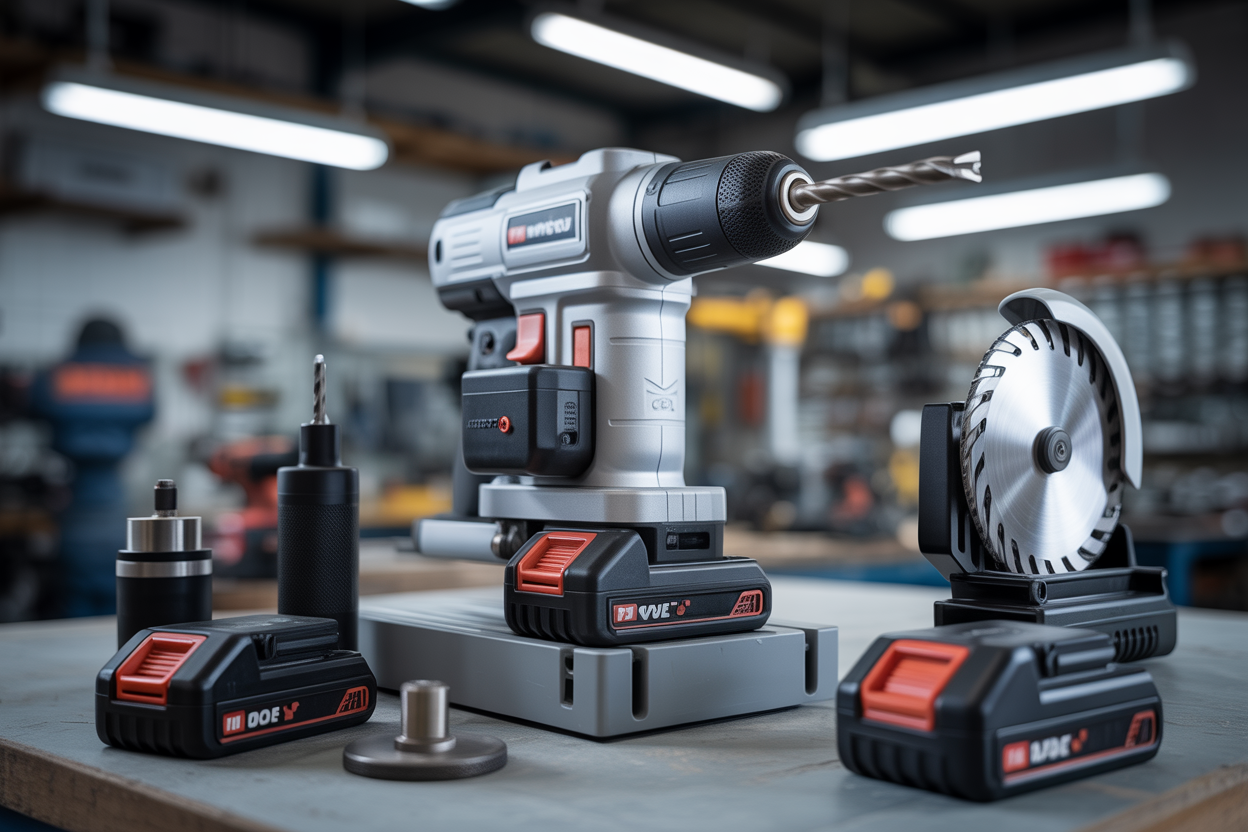
A modular tool system uses one shared battery platform and motor base with interchangeable heads or attachments1. This allows users to perform multiple functions—like drilling, grinding, or cutting—using a single core tool body.
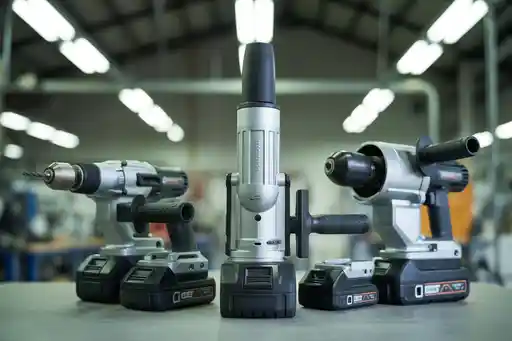
Let me paint a picture: one base, click on a drill head—you’re driving screws. Snap on a grinder attachment—suddenly you’re cutting through steel. The simplicity feels almost addictive once you try it.
Why it works
From an engineering perspective, modular systems reduce redundancy. Instead of ten different motors and casings, you’ve got one solid core that powers everything.
| Function | Attachment | Example Use |
|---|---|---|
| Drilling | Drill Head | Home construction |
| Grinding | Angle Grinder Head | Metalwork |
| Cutting | Reciprocating Saw Head | Wood cutting |
The key here is standardization. With the same voltage platform—say, 20V or 21V—you can expand your collection without new chargers or batteries. I’ve seen customers in Italy cut their tool costs by up to 40% this way.
How Multi-Functional Tools Help Reduce Costs and Save Space
Toolboxes used to be heavy. I mean, really heavy. Now, buyers want light, compact setups that travel easily from site to site.
Snippet paragraph:
Multi-functional tools cut both direct and indirect costs. They lower initial investment, reduce storage needs, simplify logistics, and minimize downtime—since fewer components mean fewer breakdowns and spare parts.
When I first showed our cordless multi-tool to a distributor in Milan, he smiled and said, “This could replace half my warehouse.” That’s when I realized—it’s not just about price; it’s about efficiency.
Real-world cost impact
- Lower capital investment: One platform replaces several dedicated tools.
- Reduced freight costs: Fewer SKUs simplify shipping and customs.
- Easier maintenance: Common parts across tools make servicing faster.
It’s a game of margins. And for resellers like Deivis, every inch of saved space means higher turnover, smoother logistics, and fewer headaches.
Design Challenges and Innovations Behind Modular Engineering
Of course, combining multiple functions into one tool sounds simpler than it is. The design stage is where the real magic (and frustration) happens.
Snippet paragraph:
Designing modular cordless tools requires balancing power, durability, and interchangeability. Engineers must ensure quick attachment changes, precise alignment, and efficient power transfer across modules.
I’ve walked through our R&D room watching engineers test attachment joints thousands of times. The question isn’t “Can it fit?”—it’s “Can it stay reliable after 500 swaps?” That’s the standard we live by.
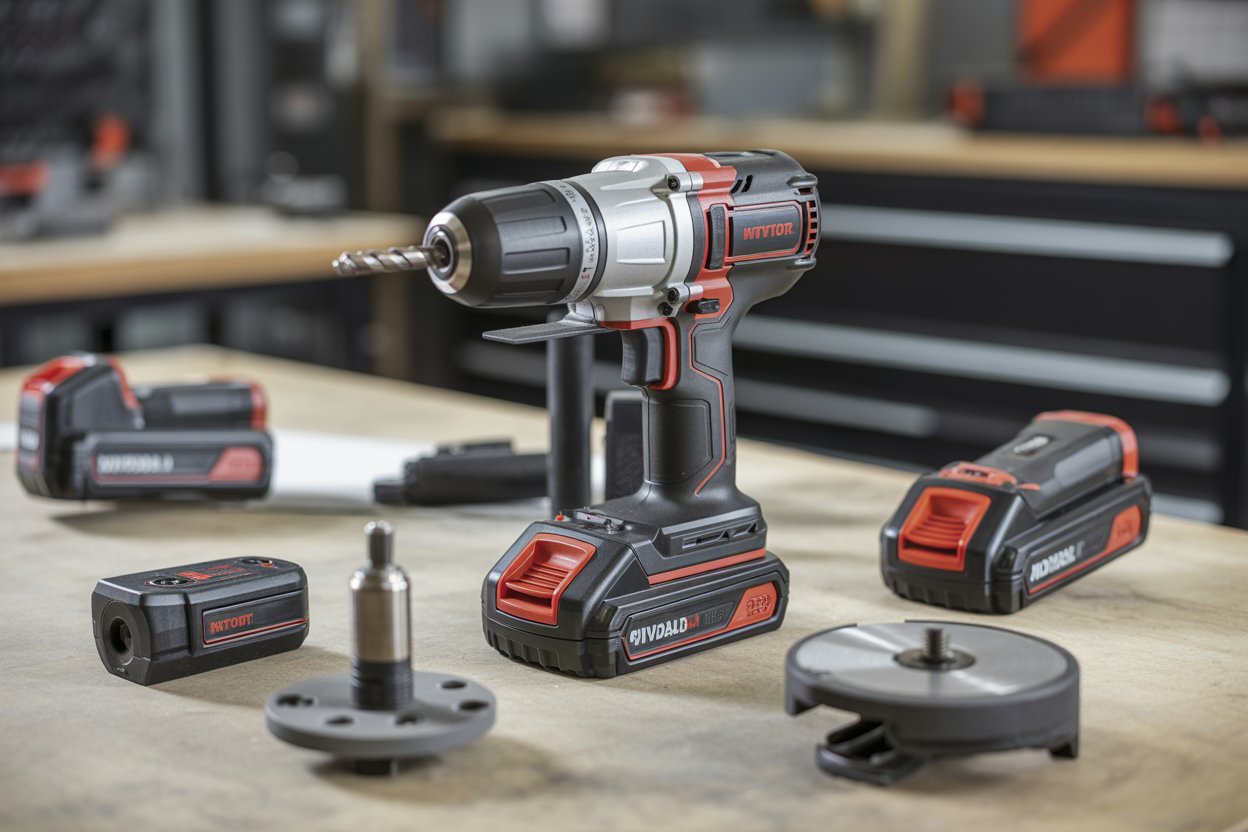
Inside the innovation lab
Each attachment point must be rugged yet intuitive. We test torque consistency, vibration absorption, and heat dispersion. That’s how our [brushless motor technology](https://www.celeramotion.com/news/articles/5-reasons-brushless-motors-better/)2 became a breakthrough—it offers consistent torque across different heads without draining extra power.
| Challenge | Solution |
|---|---|
| Alignment precision | Self-locking joint design |
| Power transmission | Direct-drive interface |
| Weight balance | Reinforced composite casing |
This is where technology meets patience. Every design iteration takes us one step closer to a future where one tool can do almost everything.
Market Demand and the Future of Versatile Cordless Tools
Demand for multi-function cordless tools is skyrocketing across Europe and South America. And honestly, I get why.
Snippet paragraph:
Global demand for modular and multi-functional cordless tools3 is growing due to higher efficiency, compact designs, and eco-friendly goals4. Markets like Europe favor these systems for lower inventory needs and improved sustainability.
When I attend trade shows, I can almost predict the first question: “Does it work with my existing battery?” Buyers want compatibility and long-term value. No one wants to buy into a system that becomes obsolete next year.
Looking forward
The future points to ecosystem thinking—one brand, one platform, infinite possibilities. Manufacturers like YOUWE are already exploring cross-platform batteries5 and AI-based diagnostics6 that alert users before a failure occurs.
Imagine your tool telling you: “Hey, I need a rest.” That’s where we’re heading.
Conclusion
Modular design isn’t just a trend—it’s a quiet revolution. Fewer tools, more freedom. That’s what I believe in, and that’s where YOUWE is heading: creating smarter, more flexible cordless tools for the world that values both power and simplicity.
-
Learn about the versatility and convenience of using interchangeable attachments for various tasks. ↩
-
Learn how brushless motors enhance performance and efficiency in power tools. ↩
-
Explore how these tools can save space and costs while enhancing efficiency in your workspace. ↩
-
Discover the environmental benefits of using modular tools in your projects. ↩
-
Understand how cross-platform batteries can enhance compatibility and convenience. ↩
-
Explore the future of tool maintenance with AI technology that predicts failures. ↩