**How to Choose a Reliable Cordless Garden Tool Supplier?
4 Standards Every Professional Buyer Should Know️⃣**
As the cordless garden tool market accelerates globally, especially in Europe and North America, more brands are shifting from corded and fuel-based equipment toward lithium-powered solutions. With this shift comes a critical challenge: how to choose a supplier who can truly support long-term product expansion, stable lead time, and consistent quality.
A supplier is no longer just a manufacturer — they are the backbone of your product ecosystem.
This extended guide explores the four most essential standards every professional buyer should evaluate before committing to a partnership.
1. Battery Platform Capability — The Foundation of Any Scalable Tool Ecosystem
The battery platform is the “engine” of every cordless garden tool lineup. It determines:
- Product scalability
- Customer satisfaction
- Long-term maintenance cost
- Brand consistency
A truly capable supplier should provide:
✓ A unified 18V/21V battery platform
One battery powering multiple tools is now the industry standard. This reduces SKU complexity and increases customer loyalty.
✓ Cell quality from verified sources
Tier-1 cell suppliers (EVE, LG, BYD, Samsung-grade) ensure low failure rates and stable discharge performance.
✓ Advanced BMS protection
Your supplier must offer:
- Over-current protection
- Over-charge/over-discharge protection
- Temperature monitoring
- Short-circuit protection
✓ Future upgrade roadmap
Reliable suppliers plan years ahead. That means:
- Higher Ah versions (2.0Ah → 4.0Ah → 6.0Ah)
- Cross-platform compatibility1 updates
- New tool categories joining the platform
Without a stable battery platform, the entire product line becomes fragmented, expensive to maintain, and difficult to scale.
📷 Image Placeholder: Unified battery platform powering drills, chainsaws, hedge trimmers, and pruning shears
2. Supply-Chain Stability — The Top Priority for European Buyers
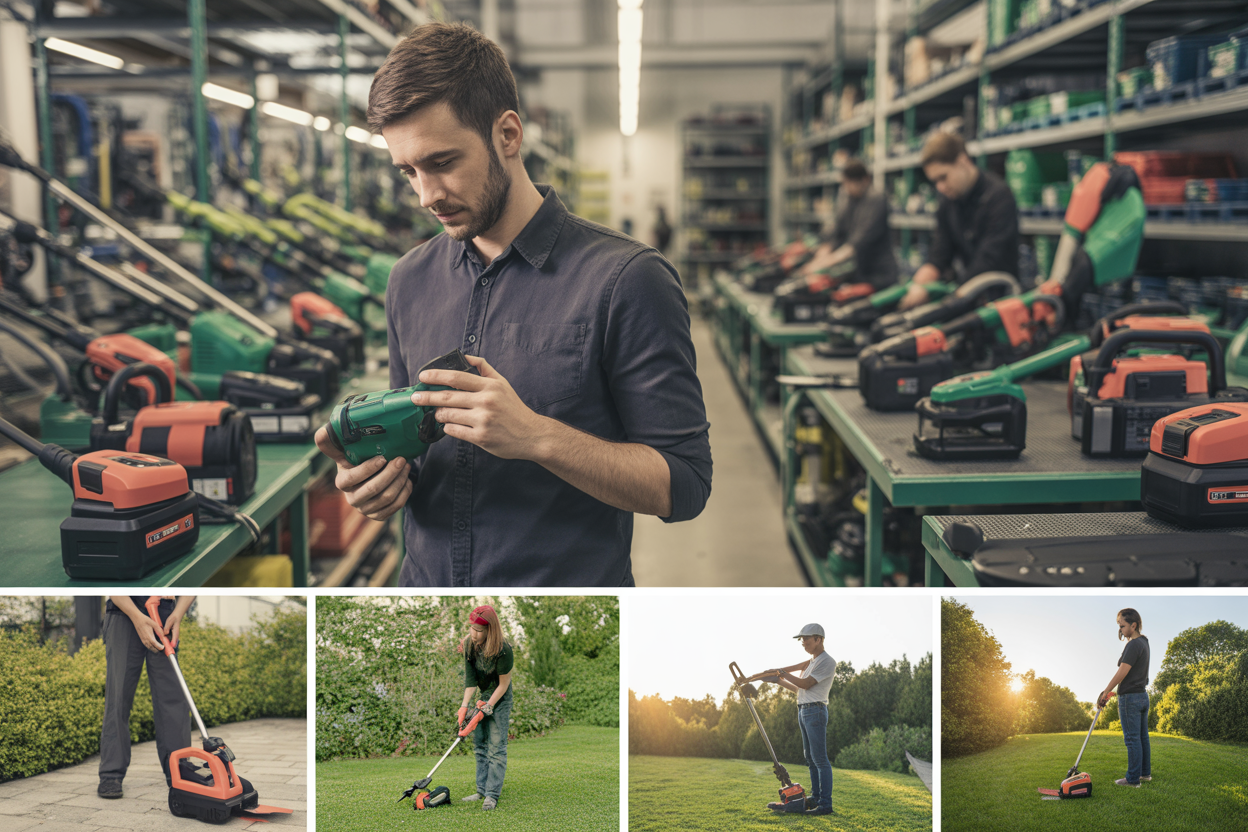
Based on feedback from EU importers, retailers, and Amazon sellers, the biggest fear is not price — it’s instability.
Common issues caused by unstable suppliers:
- Late delivery before peak season
- Sudden shortages in battery cells or motors
- Random cost fluctuations
- Unpredictable production scheduling
- Inconsistent quality between batches
These issues directly impact:
- Seller ratings
- Return rates
- Warehouse fees
- Retailer compliance
- Cash-flow planning
A trustworthy supplier should provide:
✓ Forecast planning + seasonal capacity management
Especially important for:
- Spring garden season (EU/US)
- Black Friday fulfillment
- Local retail promotions
✓ Component safety stock
High-quality suppliers stock:
- Battery cells
- Brushless motors
- PCBA boards
- Gearbox assemblies
✓ Transparent production timeline
They should be able to explain:
- Standard lead time
- High-season lead time
- Bottlenecks
- Risk-prevention plan
✓ Data-backed OTIF (On-Time In-Full)
Not empty promises — real performance.
The cost of “unstable supply” is always higher than the cost of “a slightly more expensive but stable supplier.”
📷 Image Placeholder: Busy production line & raw material inventory
3. OEM Execution & Lead-Time Control — A Critical Part of Brand Management
Reliable OEM capability directly impacts your brand reputation. It is not just logo printing — it is an engineering and project-management skillset.
A strong OEM supplier should offer:
✓ Packaging customization
- Color box
- PDQ display
- Manual design
- EAN/UPC labels
- Brand guidelines compliance
✓ Molding & color customization
- Tool housing color
- Rubber cover color
- Battery pack color
- Trigger and small parts customization
✓ Certification support
A must for Europe:
- CE
- GS
- EMC
- Noise test
- Battery transportation certification (UN38.3, MSDS)
✓ Sample approval workflow
Each step should be documented:
- Function sample
- Color sample
- Packaging sample
- Mass-production confirmation
✓ Strict lead-time control
A professional supplier gives:
- Defined production cycles
- Real production capacity
- Clear bottleneck management
- Weekly project updates
Why lead time matters more than price:
A delay of 20 days can cause:
- Missed seasonal sales
- Stockouts
- Higher logistics fees
- Expedited shipping loss
- Lower sales ranking (Amazon/retail)
Lead time is not logistics —
it is business survival.
📷 Image Placeholder: OEM workflow chart and packaging customization samples
4. Factory vs. Trading Company — Not a Question of Better or Worse

The global marketplace has changed. Today, trading companies and factories both play important roles. The key is understanding which one fits your strategy.
Factory Advantages
- Complete battery platform development
- Deep engineering support
- Consistent long-term quality
- Better for brands building tool ecosystems
- Ideal for mid-to-large volume orders
Trading Company Advantages
- Quick sourcing across categories
- Faster response for small-volume orders
- Access to multiple factories’ resources
- Better for new brands doing market testing
- Lower initial investment
The real risk:
❌ It is not buying from a trading company
❌ It is not buying from a factory
👉 The real risk is not knowing who you are working with.
A transparent supplier will explain:
- Their role in the supply chain
- Which factory produces the goods
- How quality is controlled
- How communication is handled
The more transparent they are, the smoother the cooperation will be.
📷 Image Placeholder: Side-by-side comparison table — Factory vs. Trading Company
Conclusion — A Reliable Supplier Builds a Reliable Brand
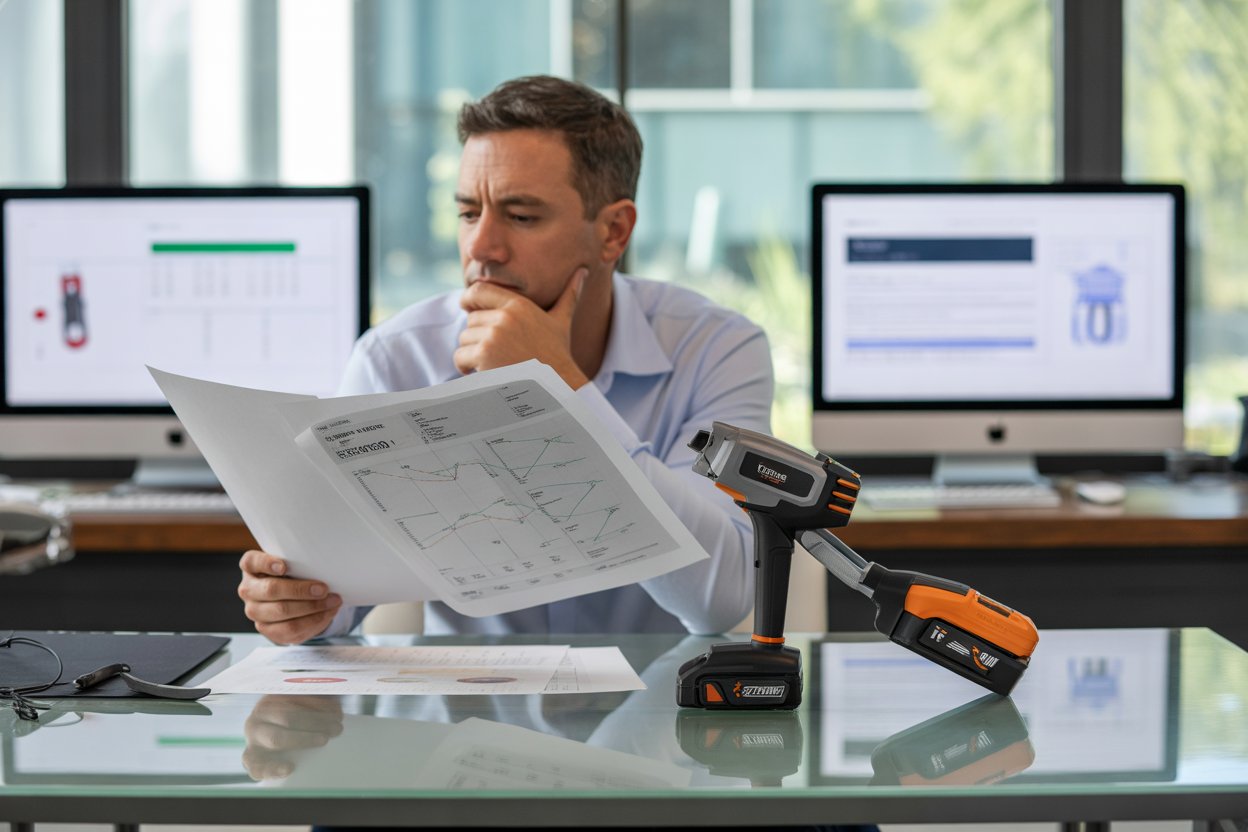
When evaluating cordless garden tool suppliers, prioritize:
- A strong and scalable battery platform
- Proven supply-chain stability
- Professional OEM execution & dependable lead times
- Transparency in whether they are a factory or trading company
Your supplier is not just a manufacturer —
they are the foundation of your brand’s long-term success.
A reliable supplier helps you launch products faster, maintain consistency, reduce risk, and expand your tool ecosystem confidently.
-
Cross-platform compatibility allows for greater flexibility and future-proofing of products. ↩