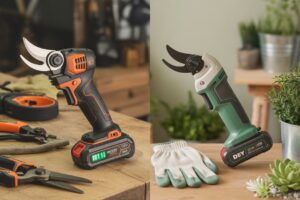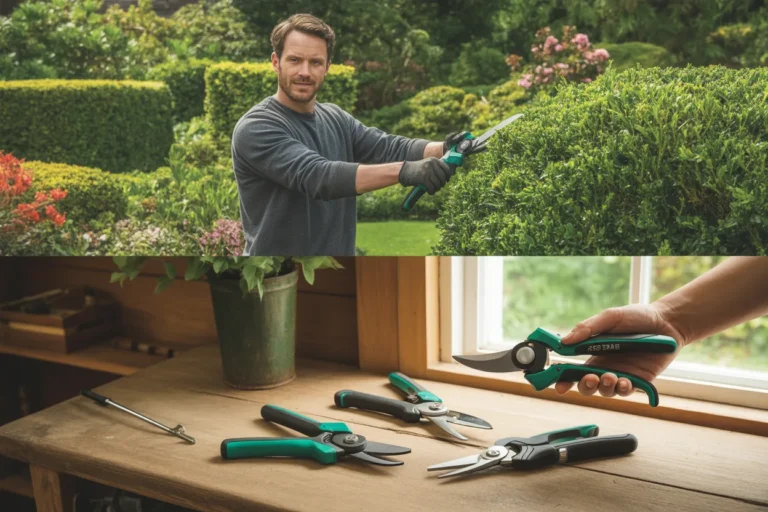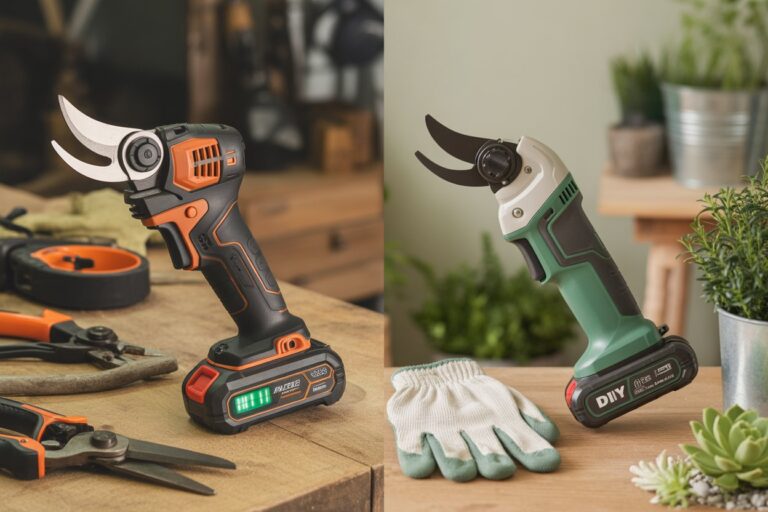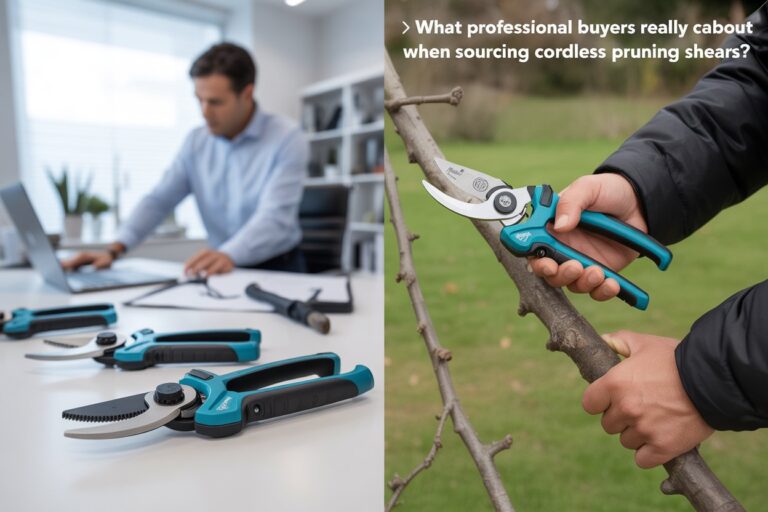
How Battery Life Shapes the Performance of Professional Cordless Pruning Shears?
I meet many buyers who want strong pruning shears, but they worry about battery life. I understand this fear. A weak battery can slow work. It can also delay jobs in peak season.
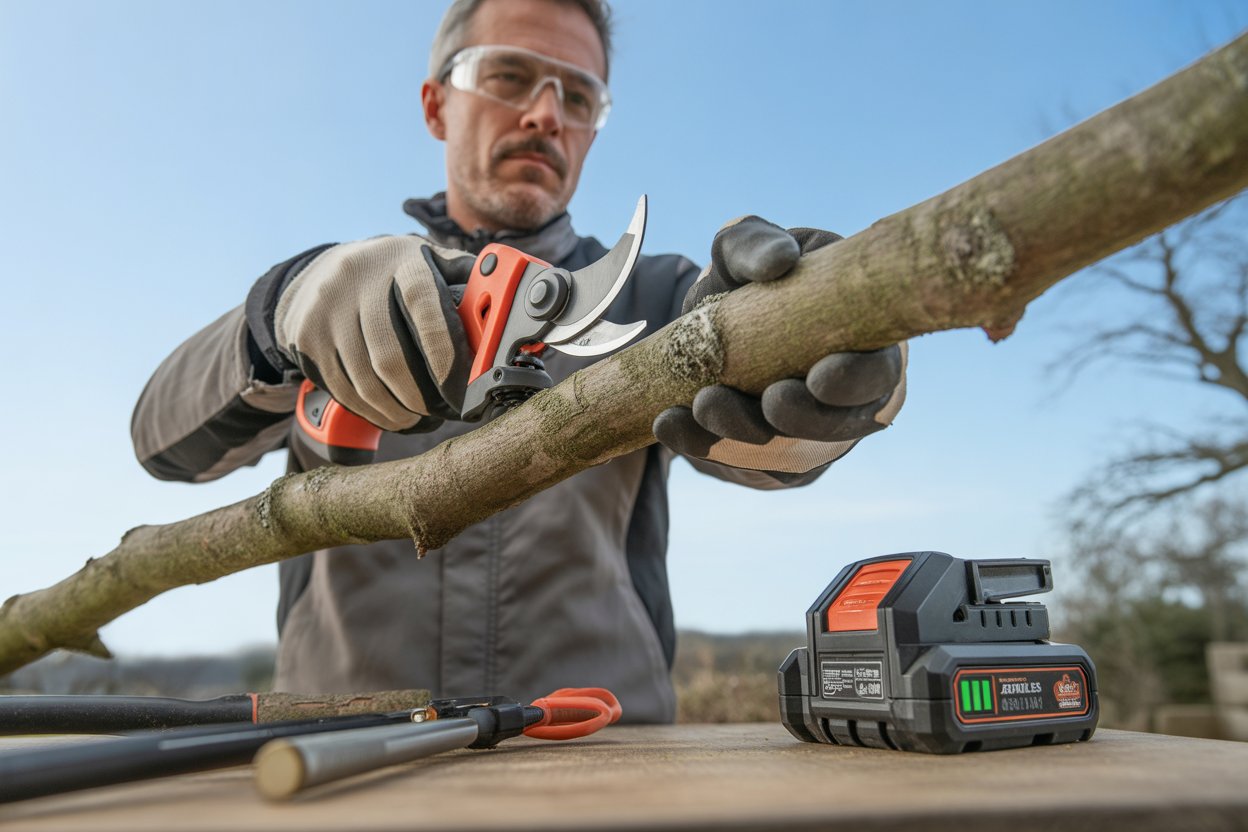
Battery life shapes how many cuts you can finish, how thick the branches can be, and how stable the power output stays during long work sessions.
I have seen buyers from Italy, Spain, and Germany compare models only by voltage or Ah. They later find that real battery life depends on cell grade1, motor type, and the control system. I want to share what I have learned in my work with OEM and ODM projects at YOUWE Garden Tools.
How Long Can a Full Battery Actually Last?
I hear this question from almost every buyer in Europe. Many think a 2.0Ah pack is too small or a 5.0Ah pack is always better. The truth is more complex. Real run time depends on work conditions and the internal system of the shear.
A full battery can last from 3 to 8 working hours, but the exact time depends on battery cells, brushless motor efficiency, and the cut load.
Battery Cell Grade
High-grade cells deliver stable discharge. This keeps the voltage flat during work. Low-grade cells drop faster. I saw one buyer from Spain complain that his other supplier’s 2.5Ah battery lasted shorter than our 2.0Ah. The issue was not Ah size. It was poor cell grade1.
| Cell Grade | Discharge Stability | Heat Level | Real Work Time |
|---|---|---|---|
| Premium 18650/21700 | High | Low | Long |
| Mid-range | Medium | Medium | Medium |
| Low-grade | Low | High | Short |
Motor Type and Control System
A brushless motor2 uses less energy per cut. The control board also decides how fast the shear reacts to branches. A good board manages overload. A weak board drains energy with every thick cut. In my work, I have seen buyers upgrade to brushless systems because the run time increases up to 30 percent.
Work Conditions
Cold weather drains batteries faster. Many German buyers test tools outdoors in winter and worry about battery health. Heat also reduces run time. Hard wood takes more power. A dry branch needs less force than a fresh, wet branch.
Cutting Capacity: Branch Size vs. Power Consumption?
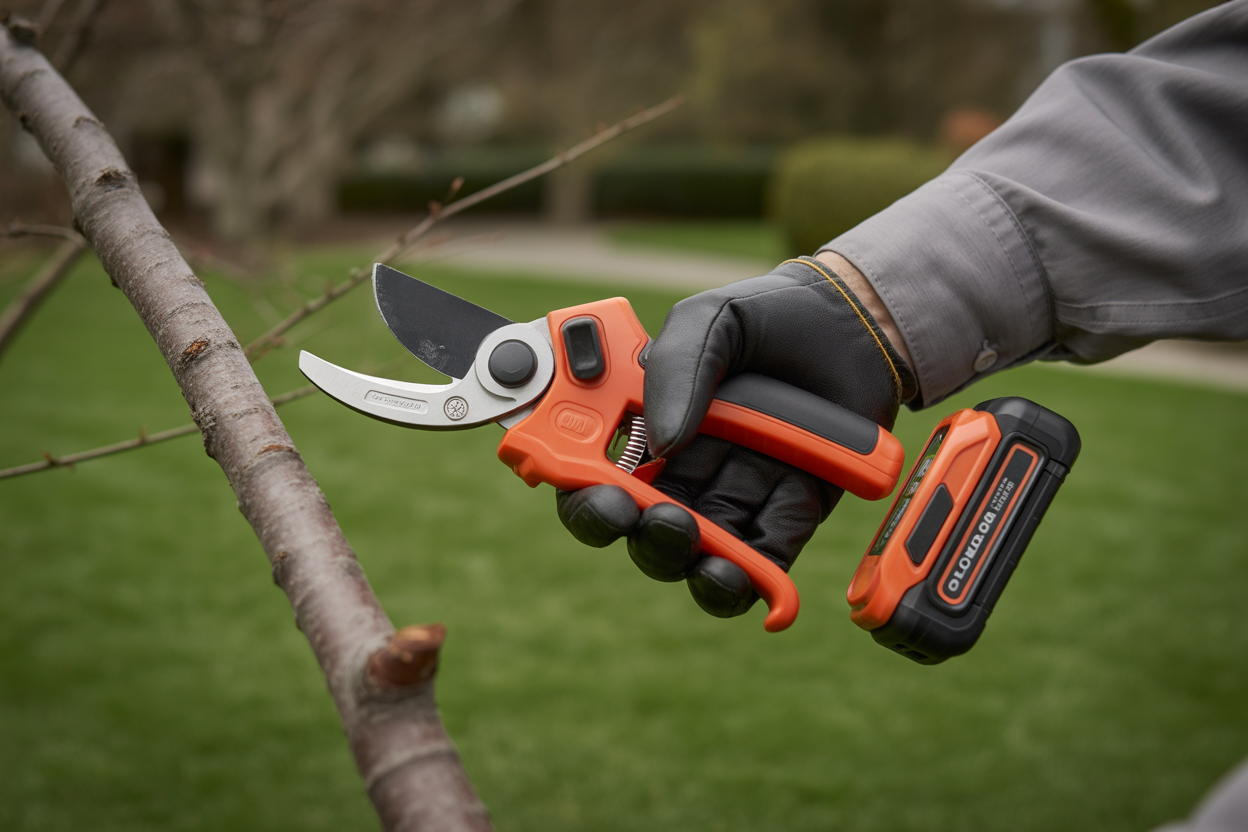
Many buyers think cutting thicker branches is only about blade size. But thick branches need more torque from the motor. This torque demand3s more current from the battery.
Bigger branches need more energy, so real cutting capacity always affects total run time.
Torque Demand vs. Battery Drain
A 25mm cut uses little torque. A 40mm cut requires much more. If the tool uses peak torque too often, the battery drains fast. When I test prototypes, I always track how many 30mm cuts the tool can finish before voltage drops.
| Branch Diameter | Torque Needed | Energy Drain | Run Time Effect |
|---|---|---|---|
| 10–15mm | Low | Low | Long |
| 20–25mm | Medium | Medium | Medium |
| 30–40mm | High | High | Short |
Blade Sharpness
A sharp blade reduces drag. A dull blade increases current draw. One buyer from Italy once told me his new samples felt weak. Later he learned his workers never cleaned the blade. Sap buildup also increases resistance.
Gear Structure and Reduction Ratio
Some shears use high reduction ratio4s to cut thick branches with lower current. This protects the battery. But it also slows the speed. Buyers who want speed often choose a lower reduction ratio4, but this uses more energy.
Real-World User Feedback: Long-Lasting or Drains Too Fast?
I read many reviews from Europe, South America, and Australia. Users care less about specs and more about how the tool feels after hours of work.
Most real users say a good pruning shear must keep stable power for at least half a workday and avoid sudden drops in voltage.
Feedback on 16.8V Systems
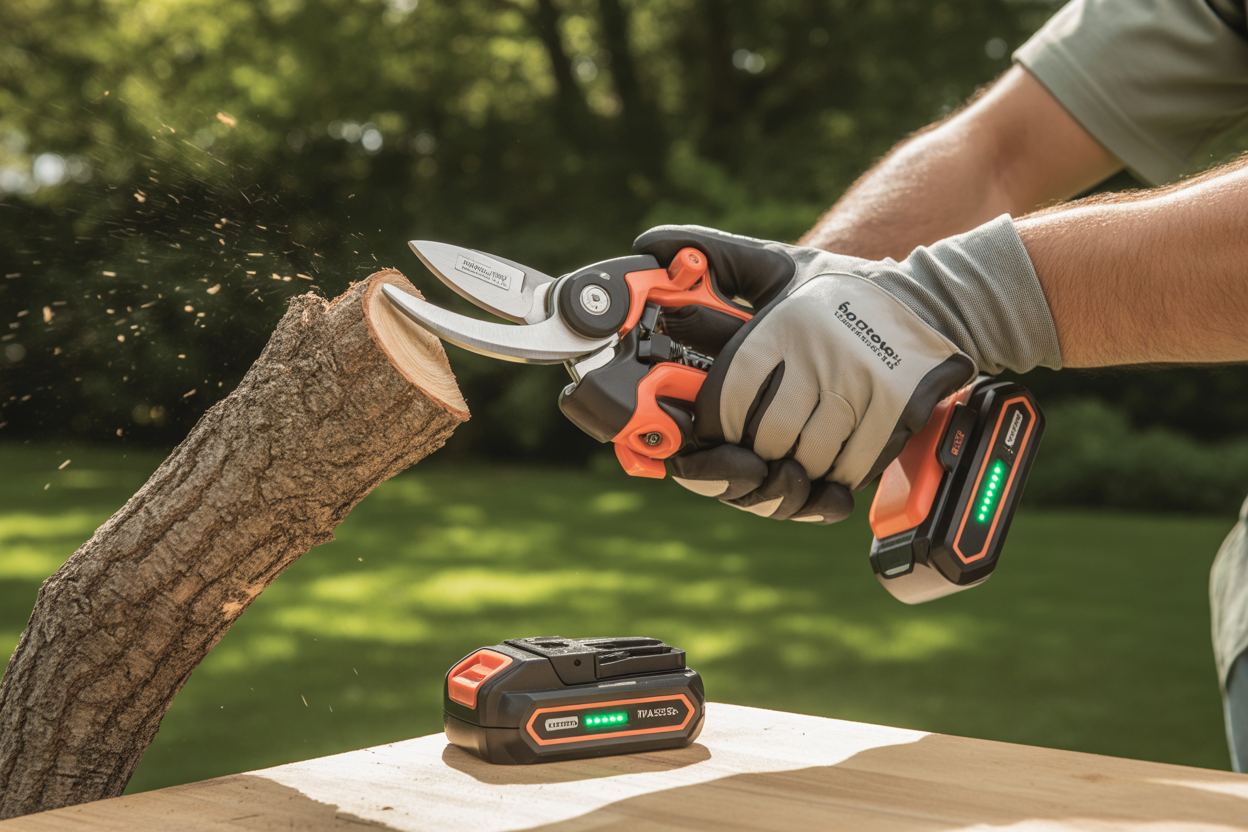
Many DIY users say they like 16.8V systems because the tools are light. But professionals say the battery drains fast when they cut 30mm branches. I saw this pattern from buyers in France and Romania.
| Voltage | Weight | Power Level | Feedback Summary |
|---|---|---|---|
| 16.8V | Light | Medium | Good for home use |
| 21V | Medium | Strong | Best for pro users |
| 40V | Heavy | Very Strong | For long cutting jobs |
Feedback on Motor Heat
If the motor heat5s up, the battery drains fast. Real users often complain about heat before they mention battery issues. Heat means wasted energy. When we upgraded our brushless system, many buyers told me their customers saw longer run time without changing battery size.
Feedback on Battery Swap Time
Pro users want quick battery swaps. Long work needs two battery packs. European buyers often ask for dual-battery kits. Many brands in Italy and Germany tell me that two 2.0Ah packs sell better than one 4.0Ah pack.
The Balance Between Power, Weight, and Portability?
Many buyers in Europe want powerful shears but also light tools. More power often means larger batteries and heavier motors. This balance is the real challenge in product design.
Power, weight, and portability must be balanced. A heavy tool drains workers. A light tool may not cut thick branches.
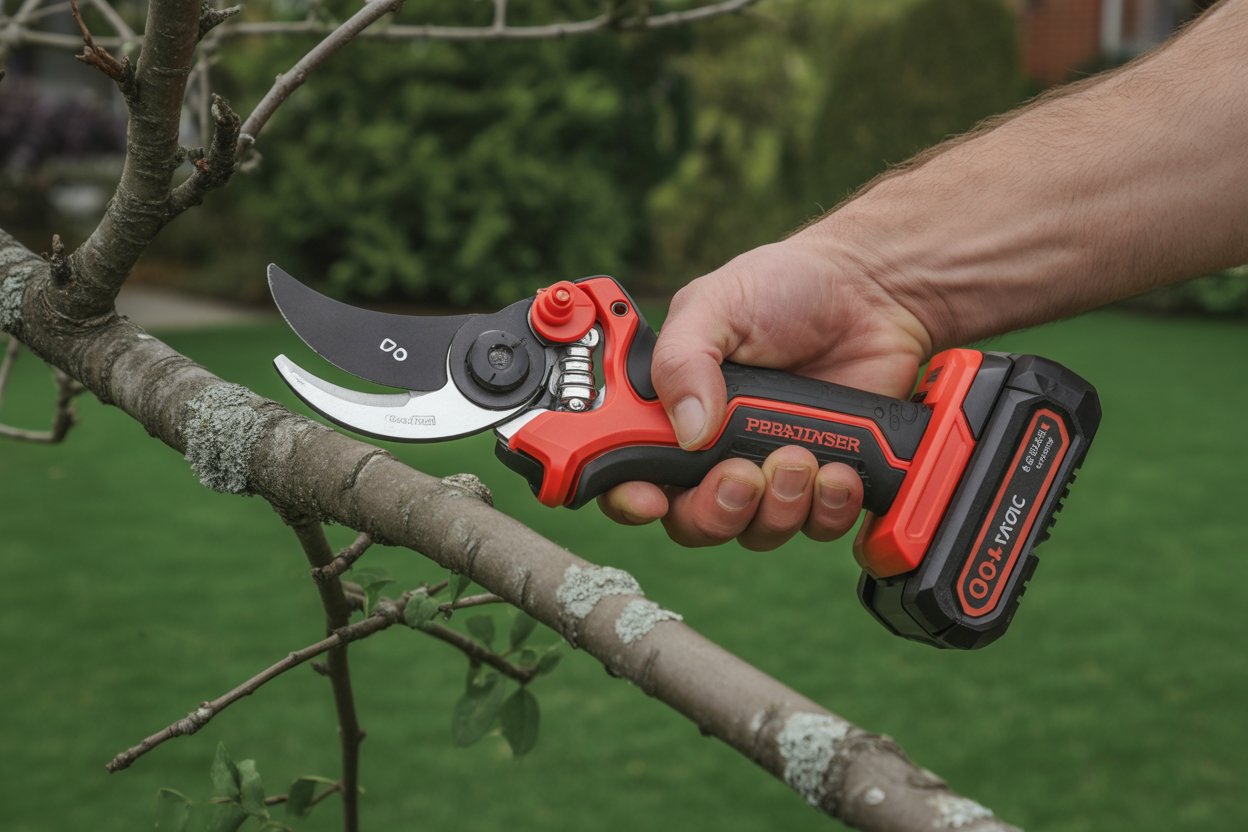
Battery Size vs. Tool Weight
A 4.0Ah pack lasts long but makes the tool heavy. A 2.0Ah pack is light but gives shorter work time. When we design OEM tools, we always ask the buyer’s target market. Italy and Spain prefer lighter tools. Germany accepts more weight for higher power.
| Battery Size | Weight | Run Time | Market Preference |
|---|---|---|---|
| 2.0Ah | Light | Medium | Italy, Spain |
| 2.5Ah | Medium | Medium | France |
| 4.0Ah | Heavy | Long | Germany, Poland |
Brushless System Advantage
Brushless motors improve power-to-weight ratio6. They give more torque with less heat. Many OEM brands ask us to upgrade to brushless even for mid-range models because European users feel the difference after long work.
Ergonomics and Portability
A balanced body reduces hand fatigue. I saw workers in Turkey compare two similar models. They chose the one with better balance, even if the battery was smaller. Comfort is part of performance.
Conclusion
Battery life7 shapes the real value of a cordless pruning shear. I see this every day in OEM and ODM work. True performance comes from the full system. Buyers who look beyond voltage and Ah make better product choices. I hope my experience helps you judge tools with more confidence.
-
Learning about cell grade can help you choose tools that offer better battery stability and longevity. ↩ ↩
-
Brushless motors can significantly enhance the efficiency and longevity of your pruning shears. ↩
-
Understanding torque demand is essential for optimizing battery usage during cutting tasks. ↩
-
Exploring reduction ratios can help you find tools that balance speed and energy efficiency. ↩ ↩
-
Understanding the relationship between motor heat and battery life can help you maintain tool performance. ↩
-
A good power-to-weight ratio ensures that tools are both effective and easy to handle. ↩
-
Understanding battery life is crucial for maximizing the efficiency and effectiveness of your pruning shears. ↩