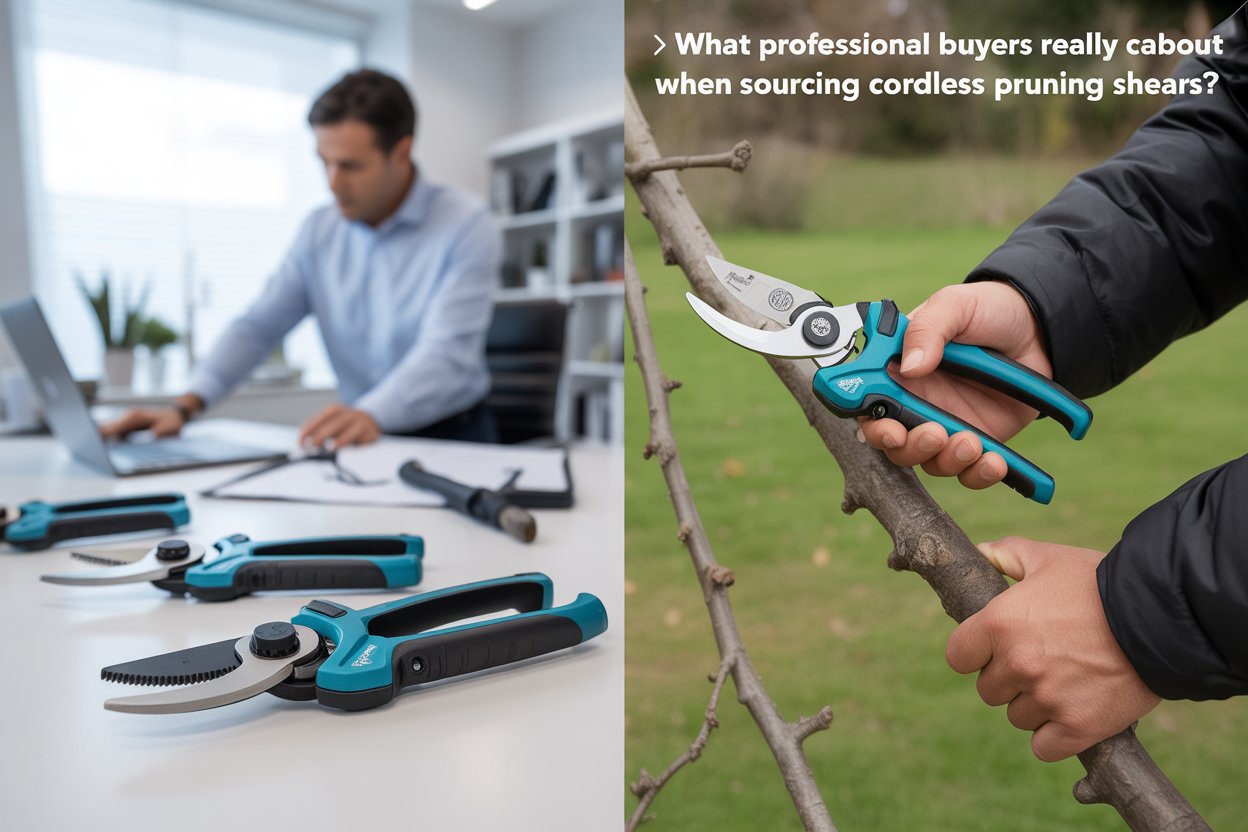
I speak with buyers every week. Many feel stressed. Specs look similar. Prices look close. Problems only show after sales start. That is when losses begin.
Professional buyers care less about numbers on paper. They care about stable use, low returns, batch control, and long supply support. These points decide if a pruning shear can survive real market use.
I learned this the hard way. I once lost a good client in Europe because of one weak batch. Since then, I changed how I judge cordless pruning shears. This article shares what really matters from my view as a factory founder.
Does Product Stability Matter More Than Cutting Power?
Many buyers ask me about cutting diameter first. I understand this habit. End users see power. But I focus on stability. Professional users cut all day. One hour of failure can destroy trust.
Product stability means the shear performs the same way after thousands of cuts. Power without stability creates complaints, repairs, and refunds.

What Stability Means in Daily Professional Use
I define stability with one question. Does the tool work the same on day one and day ninety. Many shears pass lab tests. Few survive field use.
Professional users work fast. They cut thick and thin branches without rest. Motors heat up. Gearboxes face shock. Triggers wear fast. Battery contacts loosen. These issues do not show in simple demos.
I test pruning shears with repeated cut cycles. I simulate real work. I watch motor heat. I record speed loss. I check blade alignment. Stability comes from many small parts working together.
Key Design Points That Affect Stability
| Component | Risk in Real Use | What I Control |
|---|---|---|
| Motor | Overheat and torque drop | Brushless motor tuning |
| Gear set | Tooth wear | Hardened steel gears |
| Blade | Edge loss | Heat treatment process |
| Trigger | Signal delay | Switch life testing |
| Battery | Voltage drop | Cell grading |
I learned that buyers in Italy and Spain face many seasonal workers. Tools pass between hands. Abuse happens. A stable tool survives misuse. A weak one fails fast.
Why Stable Tools Reduce Hidden Costs
I once visited a distributor in Germany. He told me labor cost for handling returns was higher than the tool margin. Stability protects profit. It also protects brand image.
When I design pruning shears, I reduce peak specs if needed. I prefer smooth and repeatable output. Professional buyers think the same way. They just say it after pain.
Why Is Return Rate More Important Than Technical Specs ?
Specs sell the first order. Return rate decides if there is a second one. I always ask buyers about their return data. This tells me how serious they are.
Return rate shows how a tool behaves after real customers touch it. It matters more than any catalog number.
Specs Do Not Show User Behavior
Most pruning shears list voltage and cutting size. They do not show misuse. They do not show drops. They do not show wrong charging habits.
In real markets like France and Poland, users mix chargers. They store tools in cold vans. They cut metal wire by mistake. I design with this in mind.
Return reasons often hide real faults. A buyer may say dead battery. The real issue is BMS protection logic. Another may say motor stop. The root cause is poor thermal design.
After-Sales Data I Always Track
| Return Reason | What It Usually Means | Action I Take |
|---|---|---|
| No power | Battery or contact issue | Redesign terminals |
| Blade stuck | Gear tolerance issue | Tighten assembly spec |
| Short runtime | Cell mismatch | Improve cell grading |
| Trigger delay | Control board logic | Firmware adjustment |
I ask buyers to share return reports. Good partners do this. Together we lower failure rates. This builds long trust.
How Low Return Rate Supports Brand Growth
Buyers in Spain once told me this. One bad review hurts ten future orders. Online channels amplify defects. A low return rate keeps ratings stable.
I design pruning shears to avoid early failure. I focus on the first six months. This period decides brand life.
How Can Buyers Ensure Batch Consistency Across Shipments?
A good sample means nothing if the second batch changes. Many buyers suffer here. I see this problem every year.
Batch consistency means every shipment performs like the approved sample. Without it, planning and branding fail.
Why Inconsistent Batches Destroy Trust
I once received a complaint from a Turkish importer. First batch sold well. Second batch had noise issues. The cause was a motor supplier change.
Small changes cause big damage. Even grease type affects sound. Even screw torque affects blade life.
Buyers often blame factories. Sometimes they are right. Sometimes factories lack process control.
My Internal Controls for Consistency
| Stage | Control Method | Purpose |
|---|---|---|
| IQC | Incoming part check | Stop bad parts |
| IPQC | Assembly checks | Control torque |
| OQC | Random testing | Verify output |
| Aging test | Run-in test | Catch early faults |
I lock BOMs for pruning shears. I avoid supplier changes. If I must change, I inform buyers. This is basic respect.
What Buyers Should Ask Before Mass Order
I suggest buyers ask about batch records. Ask about supplier stability. Ask about version control. These questions separate traders from manufacturers.
In Germany, buyers care about repeatability. I align with this mindset. Consistency keeps warehouses calm.
Can a Supplier Support Your Brand Beyond the First Order?
Many suppliers chase first orders. Few think about year three. I build for long runs.
Long-term supply means stable pricing, spare parts, and upgrade paths. This supports brand growth.
Supply Is More Than Production Capacity
I define supply reliability with simple points. Can I repeat the tool. Can I deliver parts. Can I adapt to new rules.
Battery rules change in Europe. Certification updates happen. A pruning shear must adapt. I invest in this early.
Elements of Long-Term Cooperation
| Area | Buyer Concern | My Approach |
|---|---|---|
| MOQ | Cash pressure | Flexible planning |
| Lead time | Season risk | Stable schedule |
| Certification | Customs delay | Full documents |
| Battery rules | Compliance | Platform update |
| Pricing | Margin control | Cost transparency |
I work with buyers in Italy who grow from one model to five. This only works with shared planning.
Why I Design Battery Platforms, Not Single Tools
I build 21V and 40V systems. One battery. Many tools. This helps brands expand.
Pruning shears become entry products. Later come chainsaws and trimmers. This strategy reduces risk for buyers.
Conclusion
I learned that professional buyers think long term. They value stability, low returns, consistency, and reliable supply. Specs start talks. Systems build brands. I prefer partners who grow with me.