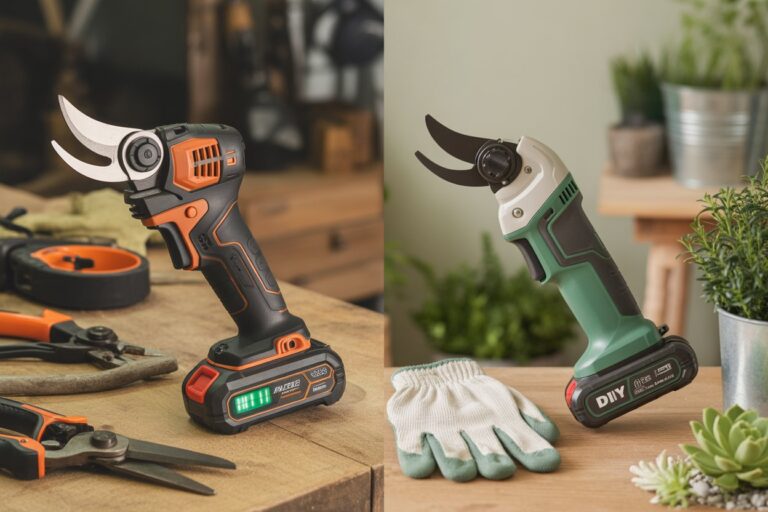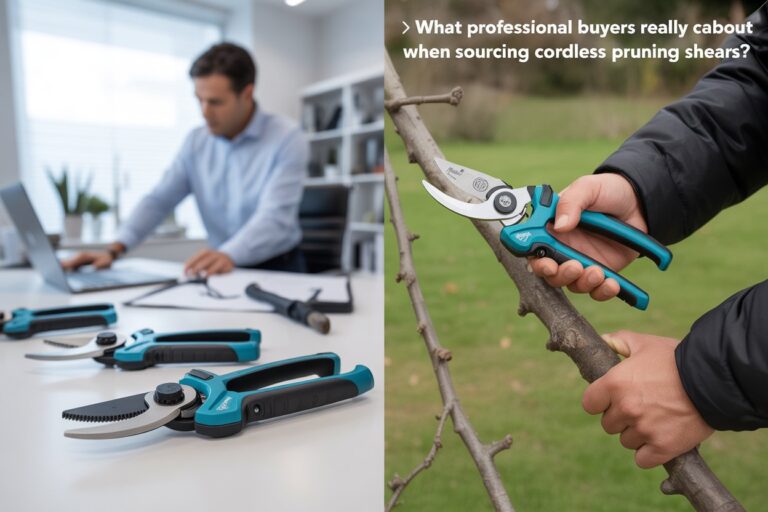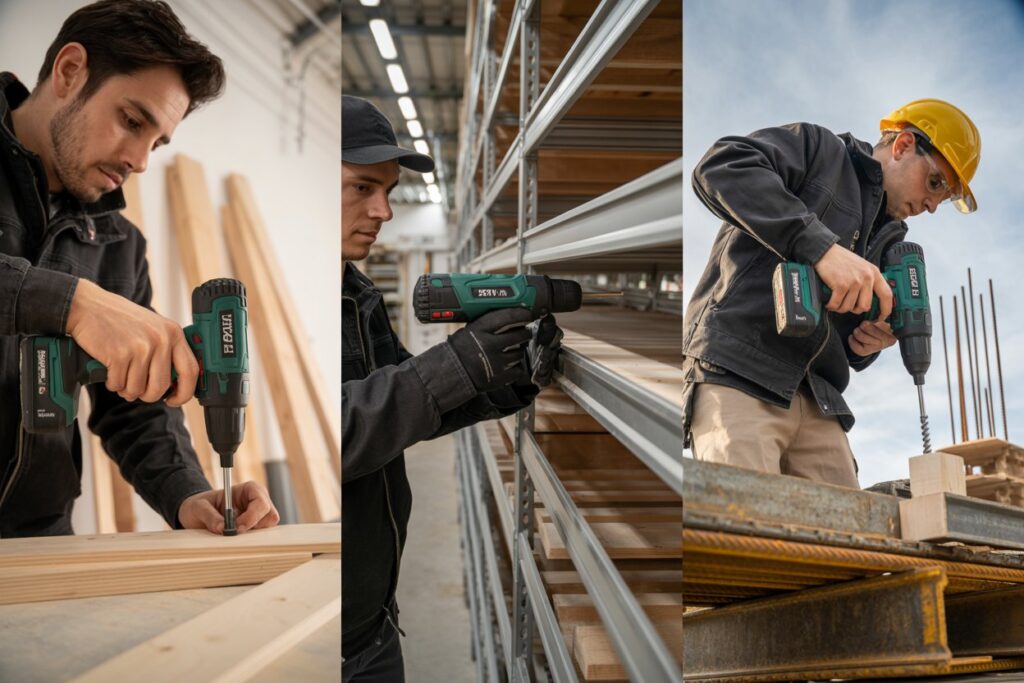

Are Lithium Battery Pruning Shears a Necessity or a Luxury?
I see many buyers from Italy, Spain, and Germany ask me if lithium battery pruning shears are tools they must buy or if they are only nice to have. I understand the confusion because the market now offers many models with big claims.
Lithium battery pruning shears are a necessity for heavy users and a luxury for light users. The value depends on work hours, cut volume, tool lifespan, and the cost of downtime.
I have seen this question in almost every sourcing talk with European importers. Some want faster work for professionals. Some want safe tools for retail lines. Others want lower price points for DIY users. I will share what I have seen inside factories, orchards, workshops, and real orders from different markets.
I have worked with many brands across Europe. I notice the same pattern. Professionals feel the pain of slow, manual cutting1. Homeowners worry about cost. Distributors try to match SKUs to users. When I speak with orchard owners or retail buyers, they do not want fancy words. They want real answers. So I will break this topic into clear parts based on what I have learned over the years.
Professional Users: Productivity Gains That Justify the Investment?
Professionals often tell me they need speed and less hand fatigue because they work all day. They want stable cuts2, safe operation, and tools that do not break during peak season.
Professional users gain clear value from battery pruning shears because the cutting speed, reduced fatigue, and longer daily output create real financial returns.
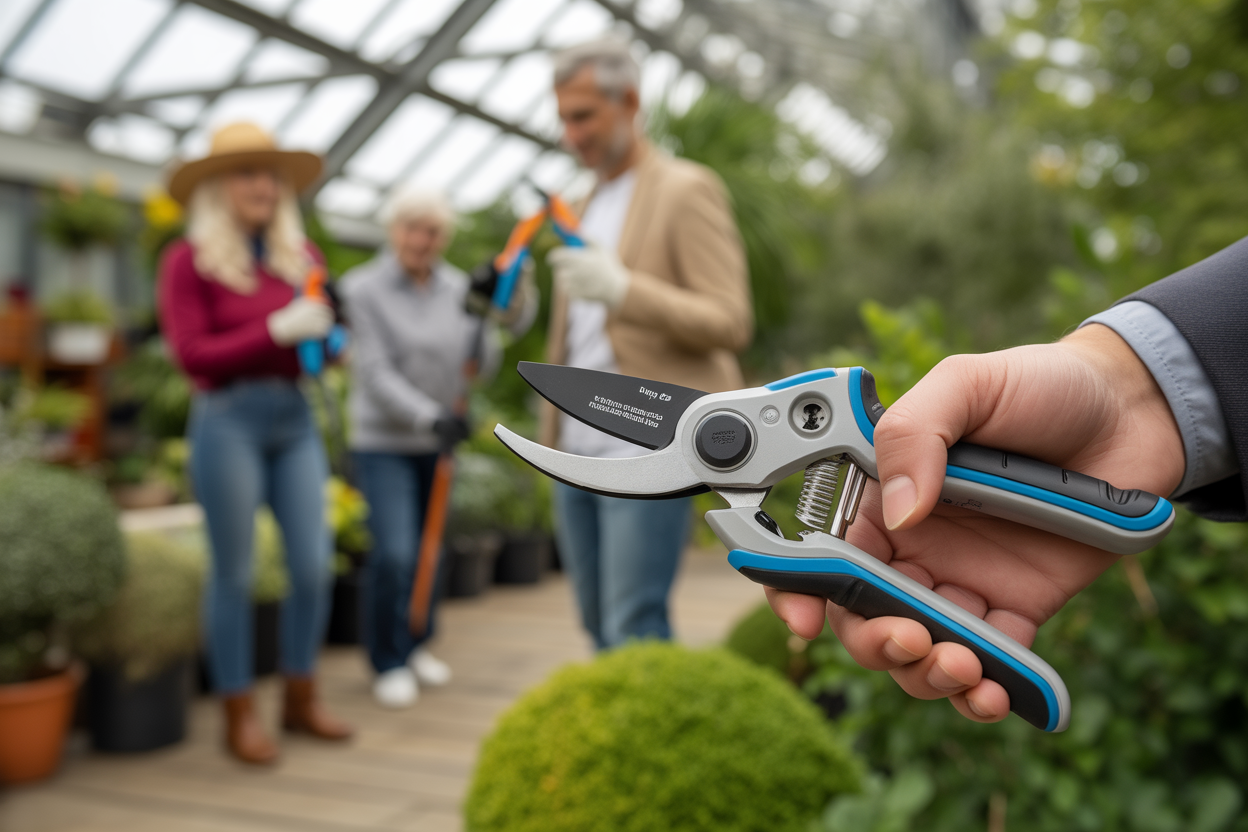
I speak with many orchard teams and pruning service companies in Italy and Spain. They tell me they use these tools 6 to 8 hours a day. Many switch from manual shears because manual tools slow down after two hours. Workers feel pain in wrists and shoulders. A battery pruner cuts faster with stable force. It helps teams finish the same work in less time. A brand from Germany once told me their old manual tools caused high turnover because workers got tired. After switching to battery tools, the team could work longer without pain.
How Productivity Changes the Cost Structure
Productivity matters because labor cost is the biggest cost for professional users. If a worker moves from 1,000 cuts per day to 3,000 cuts per day, the orchard output rises. The math becomes simple. Faster cutting means fewer workers or faster harvest. Many buyers in Spain and Italy use this calculation when they place orders with us.
| Factor | Manual Shears | Lithium Battery Shears | Impact |
|---|---|---|---|
| Cuts per hour | Low | High | Higher output |
| Fatigue | High | Low | Better health |
| Skill level | High | Medium | Easier training |
| Maintenance | Low | Medium | Predictable cost |
| Long-term ROI | Low | High | Better margins |
How European Regulations Influence Tool Choice
Professional users also care about CE, EMC, and noise rules3. I have seen many Italian and German importers get stuck because their old suppliers could not provide full EMC documentation. A battery pruning shear must pass stress tests for motor, PCB, and battery. If the factory cannot provide test reports, customs will hold the goods. So real professional buyers always prefer suppliers with real documents and stable production.
Homeowners: Occasional Use and the Question of Real Value?
Homeowners often ask if they really need a powered tool because they only trim a few branches each month. Most want something safe, simple, and not too expensive.
Homeowners may not need lithium battery pruning shears unless they have frequent pruning tasks or thicker branches that manual tools cannot handle.

I speak with many distributors who sell to hardware stores in Germany and France. They say DIY buyers4 care more about price than productivity. Many cut only small branches a few times a year. For them, manual shears are enough. But when a homeowner has many fruit trees or thick branches, a battery pruner becomes helpful. Many European homeowners also choose battery pruners for safety. A stable cut is easier to control. I see this more in older users who want to avoid wrist strain5.
How DIY Buyers Compare Price and Use Cases
Most DIY buyers4 check price first. They also talk about battery rules in Europe6 and how many batteries they want at home. Many want one tool that shares the same battery with other tools. This is why 21V platforms are popular. The challenge is that low-end battery pruners7 have shorter lifespan and weaker motors. Some DIY customers only discover this after using the tool for the second or third season.
| Buyer Type | Use Frequency | Pain Point | Best Choice |
|---|---|---|---|
| Light-use homeowner | Rare | Price | Manual or entry model |
| Home with many trees | Medium | Wrist strain | Mid-level pruner |
| Elderly users | Medium | Safety | Auto-cut battery model |
| Hobby gardeners | Medium | Branch thickness | Strong 25-40mm pruner |
Why Some Homeowners Still Choose Battery Tools
Some buyers want convenience. They want to press one trigger and finish the cut. A buyer from France once told me she used to avoid trimming her trees because it hurt her wrist. After she bought a 25mm lithium pruner, she could finish her garden work in 20 minutes instead of 2 hours. So for some DIY users, the tool brings value, even when they do not use it every week.
Cost vs. Frequency of Use: Where the ROI Truly Lies?
Buyers always ask about cost. In Europe, many retailers want to offer both low price and long life. But low price tools cannot handle heavy work. The return on investment depends on use hours, not the price tag alone.
The ROI of battery pruning shears depends on how often they are used and how much labor they save. Heavy users gain strong ROI, while light users gain limited ROI.
I have seen brands try to sell low-cost models with good marketing. But when customers use these models for professional work, they break fast. The warranty cost rises. In OEM meetings, I always tell buyers to match model and price with their users. When a buyer from Poland used a low-end model for vineyards, he lost reputation when the tools failed. When he switched to a brushless model, complaints stopped.
How ROI Is Calculated in Real Projects
ROI calculations8 are simple. Professional users measure cuts per day. DIY users measure cost per use. Importers measure warranty rate. Each group has different goals. A vineyard worker in Italy may use the tool 150 days a year. The tool must last. A DIY homeowner in Spain may use it five times a year.
| Scenario | Cost Concern | Use Hours | ROI Level |
|---|---|---|---|
| Orchard team | High | Long | Very strong |
| Vineyard pruning | Medium-high | Long | Strong |
| Retail consumer | High price sensitivity | Short | Low |
| Landscaping service | Medium | Medium | Medium-strong |
Why Warranty Data Changes Pricing Decisions
European buyers often ask us for real failure rates. A strong model with a brushless motor9 gives stable life. A cheap brushed motor may fail under heat. When warranty cases rise, importers lose profits even when the selling price is high. So ROI is not only about how much the buyer pays. It is about how long the tool works without trouble.
Matching Tools to Scenarios: When a Power Pruner Makes Sense—and When It Doesn’t?
Different markets have different needs. A one-size-fits-all model will not work. Some scenarios need speed. Some only need simple cuts.
A power pruner is useful when branches are thick, work hours are long, or safety is a priority. It is unnecessary when work is rare or branches are small.
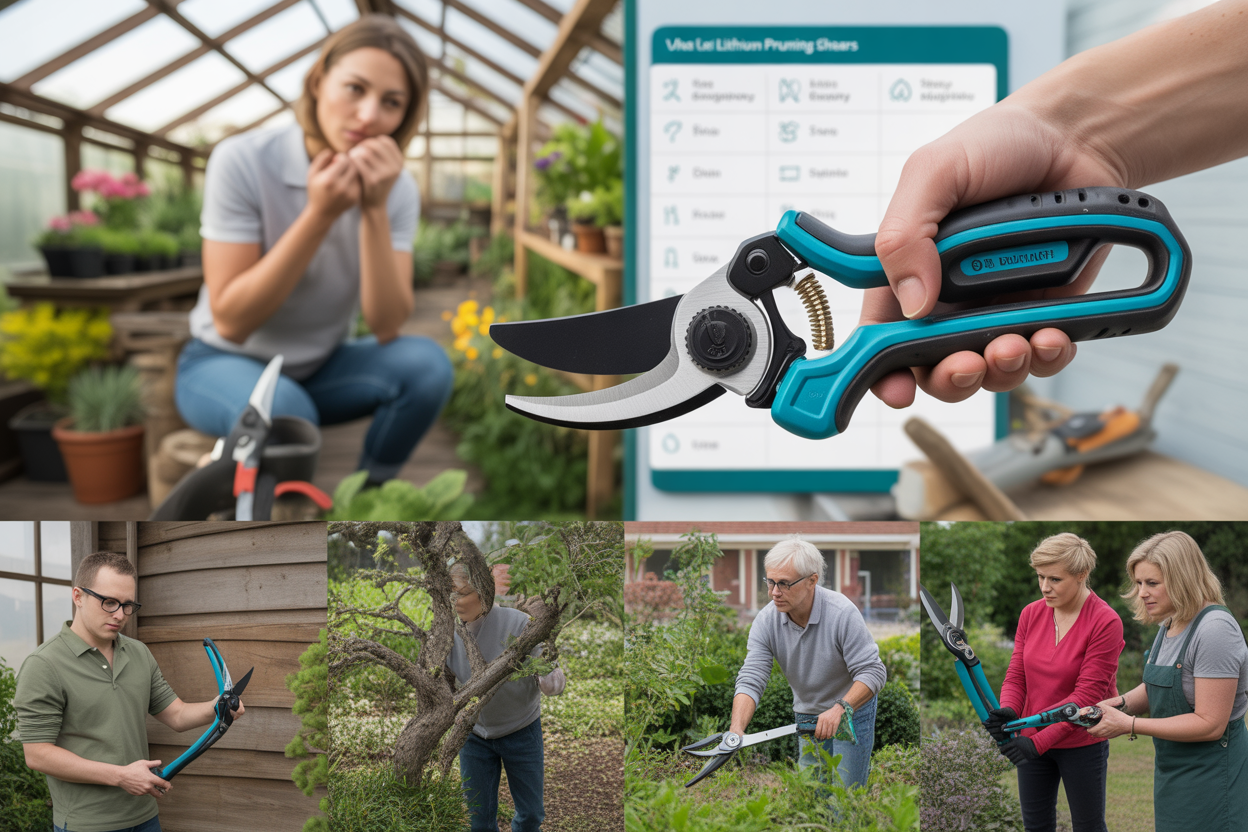
I work with importers who supply orchards, vineyards, home centers, and landscaping teams. They often ask me which battery pruner model they should pick. The answer depends on the users. A 50mm model is too strong for small garden stores10. A 25mm model is too weak for professional farms. When I design new models, I think about who will use the tool.
Scenario-Based Tool Selection
Different environments change the ideal model. Many Italian vineyards need fast cuts. German garden stores need safe models with simple switches. Spanish hardware chains prefer mid-range models for price control. These differences shape the OEM choices buyers make.
| Scenario | Best Model | Reason |
|---|---|---|
| Vineyards | Brushless 25–40mm | Speed and power |
| Olive farms | 40–50mm | Thick wood |
| Home gardens | 25mm brushed | Light and low price |
| Retail chains | Mid-range 30mm | Balanced specs |
When a Power Pruner Does Not Make Sense
Some users should not buy power pruner11s. If the work includes very small plants or infrequent cuts, manual tools work better. They are simple. They have no charging issues. They cost less. I tell many retailers not to push power pruner11s to first-time gardeners12 because these users often return the item after one or two uses.
Conclusion
I have worked with many brands, distributors, and orchard teams across Europe. I see a clear pattern. Lithium battery pruning shears13 bring real value when the user works often and needs speed. They also help when branches are thick or when safety matters. But they are not ideal for every user. Homeowners with light work often feel they do not need them. A good match between user, frequency, and model type brings the best outcome. This is why I always ask buyers to share their market type14, customer group15, and yearly volume before we suggest an OEM or ODM solution. A clear match helps them reduce risk and keeps the product line healthy for many seasons.
-
Explore the limitations of manual cutting tools compared to battery-powered options. ↩
-
Understand the significance of stable cuts for efficiency and safety in pruning. ↩
-
Learn about the regulations that affect the choice of pruning tools in Europe. ↩
-
Understand the preferences and priorities of DIY buyers when selecting tools. ↩ ↩
-
Discover how the right pruning tools can alleviate wrist strain for users. ↩
-
Explore the regulations surrounding battery usage in tools across Europe. ↩
-
Learn about the potential issues and drawbacks of low-end battery pruners. ↩
-
Discover how to calculate the return on investment for pruning tools effectively. ↩
-
Explore the benefits of using brushless motors in pruning tools for durability. ↩
-
Explore the ideal tools for small garden stores to meet customer needs. ↩
-
Understand the situations where a power pruner is essential for effective pruning. ↩ ↩
-
Find out which tools are best suited for first-time gardeners to avoid returns. ↩
-
Explore the advantages of lithium battery pruning shears for efficiency and ease of use. ↩
-
Learn how different market types affect the choice of pruning tools. ↩
-
Understand the characteristics that define customer groups in the pruning tool market. ↩