
Professional-Grade vs DIY Cordless Pruners: How to Position the Right Product for the Right Market
Cordless pruners come in many types. Many buyers confuse professional tools with DIY options. Choosing wrong can lead to poor performance and returns. I often see this with first-time European buyers.
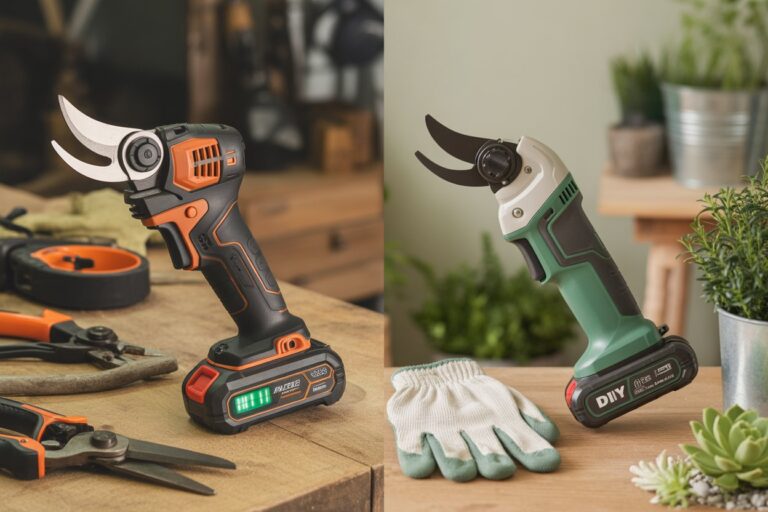
Professional-grade pruners are designed for frequent, heavy use, while DIY pruners suit light, occasional tasks. Correct positioning prevents complaints and builds trust.
In my experience at YOUWE Garden Tools, helping overseas wholesalers and importers understand this distinction is key. I remember a Spanish buyer who tried selling DIY pruners to professional landscapers. The results were poor, and orders almost stopped. Learning how to guide buyers properly changed everything.
Defining Professional-Grade and DIY Cordless Pruners: Key Differences Buyers Must Know
Choosing the wrong pruner damages reputation. Many buyers struggle to tell professional from DIY tools. This confuses end users and leads to returns.
Professional pruners have stronger motors, longer battery life, and better durability, while DIY models are lighter and for occasional use.

I often explain to clients that pruner design and power define the category. Professional models usually use brushless motors1 and higher-voltage batteries (21V+), while DIY models use simpler brushed motors. Features like ergonomic grips and replaceable blades also distinguish them.
Motor Type and Battery Voltage
| Feature | Professional | DIY |
|---|---|---|
| Motor | Brushless | Brushed |
| Voltage | 21V-25.2V | 16.8V-18V |
| Cutting Capacity | 35-50mm | 20-30mm |
| Duty | Heavy daily use | Light occasional use |
| Replacement Parts | Easy | Limited |
Build Quality and Safety
Professional pruners use metal housings and reinforced mechanisms. They often include safety locks2 and overload protection. DIY models rely more on plastic and simple safety measures. European importers often check CE and GS compliance for professional models.
Packaging and Branding Differences
Professional tools are often sold in hard cases or kits with extra batteries. DIY tools come in minimal packaging. Wholesalers in Germany and Italy prefer clear differentiation in the shelf display.
Usage Frequency and Cutting Demands: Matching Products to Real-World Applications
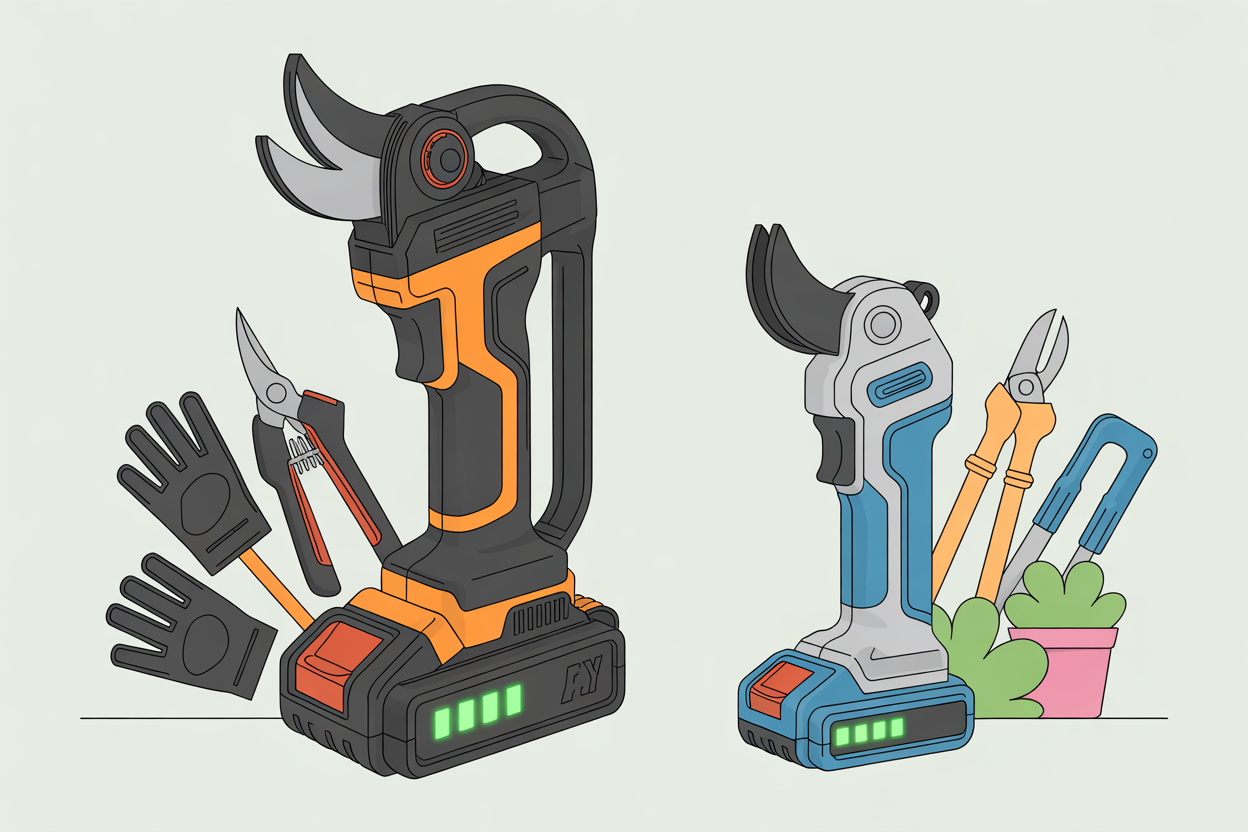
Many buyers fail to match tools to real-world demands. A landscaper needs pruners that run all day, while a gardener uses them weekly. Misalignment leads to poor reviews.
Heavy-duty pruners handle frequent cutting, while light-duty tools are best for occasional garden tasks.
Daily Workload and Tool Stress
Professional users prune many trees or shrubs daily. They need longer battery life3 and stronger cutting capacity4. DIY users prune a few bushes. Using a professional pruner in a DIY context increases cost without benefits.
Task Complexity and Safety
Professionals often cut hard wood and thick branches. They need precise, strong pruners. DIY users cut thin branches. Overpowering DIY tools can damage plants and tool.
European Buyer Example
| Buyer Type | Branch Size | Expected Usage | Tool Recommendation |
|---|---|---|---|
| Spain landscaper | 40mm | Daily | Professional 25.2V |
| Italy homeowner | 25mm | Weekly | DIY 16.8V |
| Germany nursery | 30mm | Twice a week | Professional 21V light |
Pricing, Durability, and After-Sales Risk: Why Market Positioning Matters
Some wholesalers price tools too low or mix categories. This creates returns and complaints. Durability matters as much as price.
Professional tools cost more but last longer and reduce after-sales risk, while DIY tools are cheaper with lower durability.
Cost vs Longevity
Professional pruners have higher upfront cost but lower long-term replacement needs. DIY pruners are cheaper but wear faster. European buyers expect transparent pricing5.
Warranty and After-Sales
Professional tools often include 1-2 year warranties. DIY tools sometimes offer shorter coverage. Buyers must inform end users to avoid disputes.
Risk Management Table
| Factor | Professional | DIY |
|---|---|---|
| Price | High | Low |
| Expected Life | 5+ years | 1-2 years |
| Warranty | 12-24 months | 6-12 months |
| Return Rate | Low | Higher if misused |
How Wholesalers Can Build Clear Product Tiers Without Confusing End Users
Some wholesalers mix professional and DIY models. This confuses customers and creates returns. Clear tiering improves sales and trust.
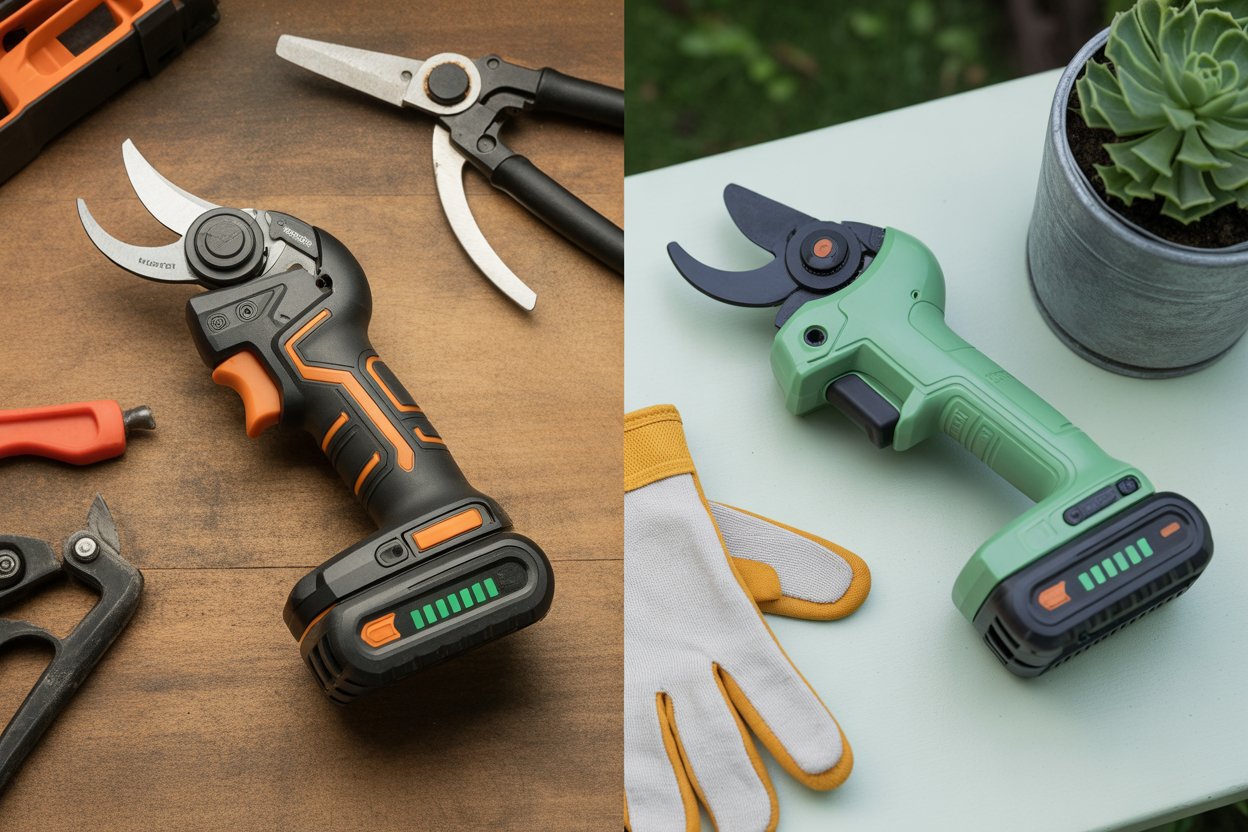
Separate professional and DIY pruners in catalogs, packaging, and shelf displays. Use voltage, motor type, and cutting capacity as identifiers.
Tiering by Performance
List pruners by motor type, battery voltage, and cutting capacity4. Make professional pruners visually distinct.
Catalog Organization
| Tier | Motor | Voltage | Target User |
|---|---|---|---|
| Professional | Brushless | 21V-25.2V | Landscapers, contractors |
| DIY | Brushed | 16.8V-18V | Gardeners, homeowners |
Packaging and Shelf Tips
Use clear color codes for professional vs DIY models. Hard cases for professional, minimal box for DIY. Include usage labels on packaging. European importers notice clarity.
Conclusion
Positioning cordless pruners correctly reduces complaints and returns. I advise wholesalers to focus on motor, voltage, and usage. Clear tiers build trust in Europe and beyond. Proper guidance ensures products fit real user needs.
-
Explore the benefits of brushless motors and how they enhance pruner efficiency. ↩
-
Discover how safety locks can prevent accidents and enhance user safety. ↩
-
Understand how longer battery life can improve productivity for professional users. ↩
-
Learn about the cutting capacities of different pruner types and their applications. ↩ ↩
-
Understand the importance of transparent pricing in reducing returns and complaints. ↩